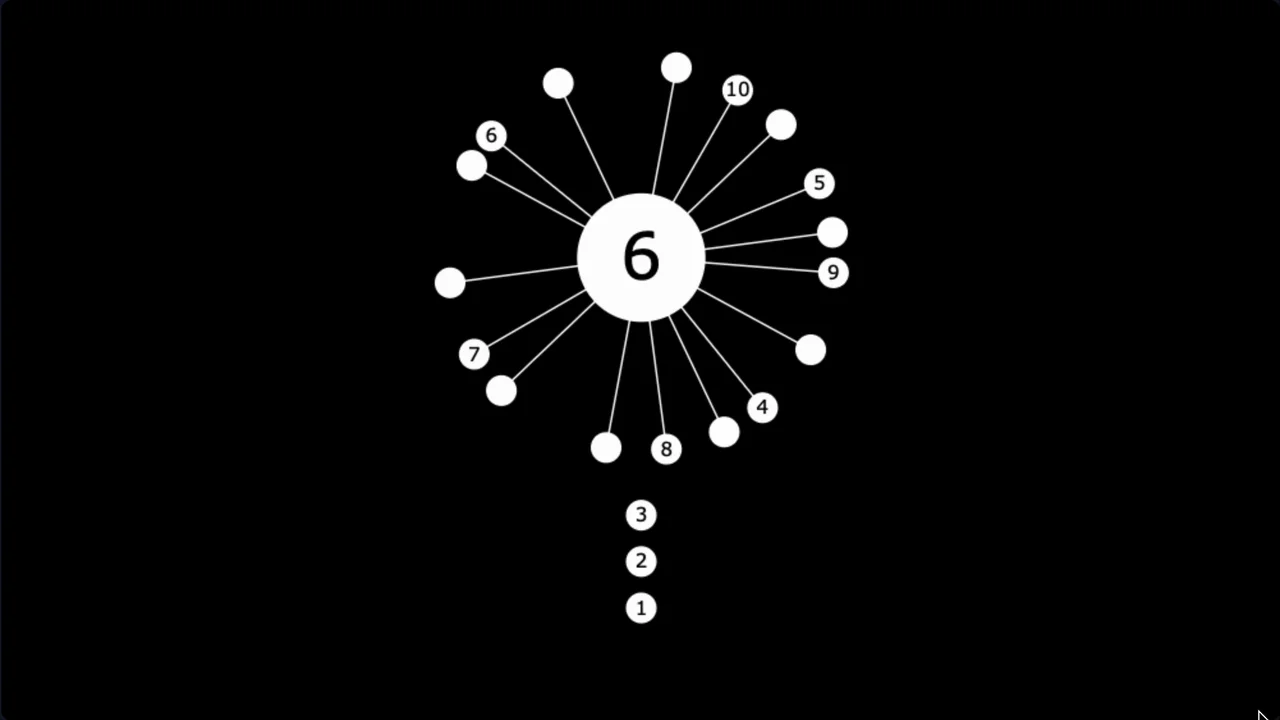
Launch a small ball, watch it lock onto a spinning core, and try not to blink — Coreball turns a one-click idea into a surprisingly tense precision game that's easy to learn but hard to put down.
Game Overview

The loop in Coreball is simple to describe and satisfying to master: a large core sits in the middle of the screen with a handful of starter balls already attached, dividing it into equal sectors. Your job is to launch every remaining ball onto that core without clipping a ball or pin that's already in place. One collision and the level resets on the spot.
What makes this more than a reflex test is the rotation itself. The core can spin clockwise or counter-clockwise depending on the level — in the first ten stages alone, levels 4, 6, 8, and 9 spin counter-clockwise while the rest go clockwise — and its speed shifts unpredictably as you play. As more balls attach, the open sectors shrink, so later shots demand real spatial planning rather than quick reflexes alone. Coreball originally launched in 2015 with 60 levels and has since grown into a 500-level gauntlet, with the difficulty climbing from relaxed warm-ups to razor-tight timing checks.
Control & How to Play
- Left-click to launch a ball toward the core (desktop)
- Spacebar as an alternate launch input — alternating clicks and spacebar taps can help you find a steadier shooting rhythm
- Right-click also fires a ball, with the browser context menu disabled during play
- Tap anywhere on the game area to launch on mobile, tablet, or Chromebook — fully responsive on touchscreens
- Watch the core complete at least one rotation before your first shot on a new level, so you can read its speed and direction
What Makes Coreball Fun
Coreball's appeal comes from how honest its difficulty feels. The rules take one second to understand, but clearing the later stages feels like a genuine skill win — every failure has a clear, visible cause, which keeps the "just one more try" loop going rather than feeling cheap.

That tension really shows up in the dense levels. Level 8, for example, starts with 16 balls already on the core and only 3 left to launch, leaving razor-thin gaps to aim for — staring at that many balls circling at once can genuinely start to blur your focus, almost like motion trails on the eyes.
On the flip side, there's real satisfaction in a clean, evenly distributed run. Spacing your shots deliberately across every sector rather than clustering them turns a level into a tidy, almost puzzle-like solve instead of a scramble.
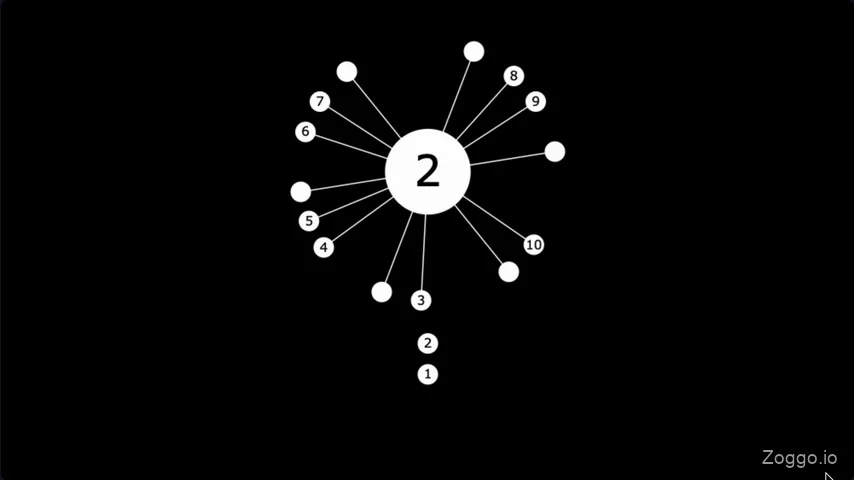
The clean, distraction-free visual layout also makes Coreball an oddly calming focus trainer — precise, quiet, and repeatable in short bursts.
Tips & Strategy
- Count before you shoot: Look at how many starter balls are already on the core (which tells you the number of sectors) and how many balls you still need to launch. Divide the remaining balls by the sector count and round up — that's roughly the max number of balls each sector should hold. For example, on Level 1 (4 starter balls, 8 to launch), aim for about 2 per sector; on Level 9 (0 starter balls, 26 to launch), every ball goes into the single open sector.
- Spread your shots early: Placing your first few balls across different sectors, rather than piling them into one, keeps wider and safer gaps open for your later, more difficult shots.
- Aim for where the gap will be, not where it is: React to the core's position by the time your ball arrives, not its position the instant you click.
- Watch for direction changes: Rotation direction isn't fixed — some early levels alternate between clockwise and counter-clockwise, so don't assume the previous level's pattern carries over.
- Pace yourself on dense levels: When a level has many starter balls already in place, take a breath before firing — the visual clutter can make it harder to track the real gap, so a steady rhythm beats rushing.
Level Analysis: Deconstructing the First 10 Stages
To help you build a solid baseline, here is a detailed operational layout of the first ten levels, detailing their starting configurations, target counts, and optimal placement limits per sector:
| Level | Initial Pins on Core | Pins to Launch | Max Pins per Sector | Rotation Direction |
|---|---|---|---|---|
| 1 | 4 | 8 | 2 | Clockwise |
| 2 | 6 | 10 | 2 | Clockwise |
| 3 | 2 | 20 | 10 | Clockwise |
| 4 | 8 | 12 | 2 | Counter-Clockwise |
| 5 | 12 | 8 | 1 | Clockwise |
| 6 | 10 | 10 | 1 | Counter-Clockwise |
| 7 | 12 | 12 | 1 | Clockwise |
| 8 | 16 | 3 | 1 | Counter-Clockwise |
| 9 | 0 | 26 | 26 (Open Core) | Counter-Clockwise |
| 10 | 16 | 10 | 1 | Clockwise |
FAQ
What is Coreball?
Coreball is a minimalist online arcade game where you launch small balls onto a central rotating core, trying to attach all of them without any collisions.
Is Coreball free to play?
Yes, Coreball is completely free to play in your browser on both desktop and mobile, with no downloads or account registration required.
What happens if I hit another ball in Coreball?
The attempt ends immediately and the level resets, though your overall progress through unlocked levels is saved automatically.
How many levels does Coreball have?
Coreball has expanded from an original 60 levels at launch to 500 levels as of early 2025, with difficulty scaling from simple rotations to fast, tightly-spaced patterns.
Does the core always spin the same direction?
No — the rotation direction varies by level and can switch between clockwise and counter-clockwise, which is part of what keeps each stage unpredictable.